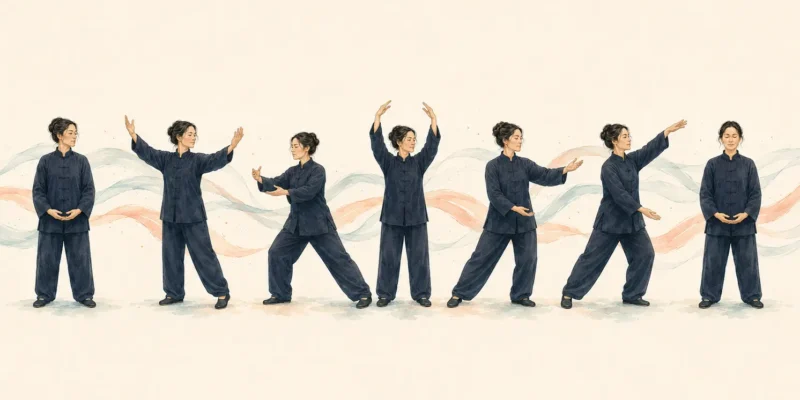
What is Shibashi?
Shibashi is a flowing sequence of eighteen movements combining elements of Tai Chi and Qigong. It uses comfortable movement, natural breathing, balance and attention rather than physical effort or complicated positions. It is easy to begin, but contains plenty to explore as the movements become more connected and less effortful.
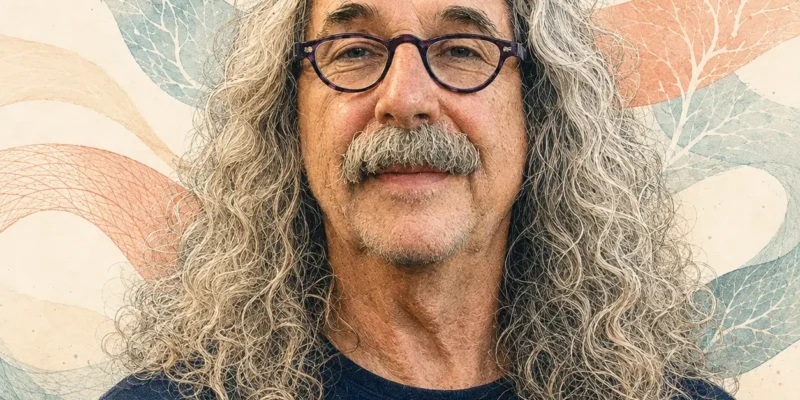
About Richard
I have practised movement systems for more than 40 years and taught for more than 30. My background encompasses science, technology, music, Tai Chi, Qigong and instrument design—all of which influence the way I understand and teach movement. I approach Shibashi with curiosity rather than doctrine: what are we doing, what can we feel, and what might explain it?
How it works
The original Shibashi sequence was created by Lin Housheng in 1979. It brings together eighteen gentle, flowing movements drawn from Qigong and Tai Chi.
Through many years of practising and teaching Shibashi, I have developed a scientific approach to exploring how it may support health and well-being. Rather than asking people to accept traditional explanations, I look at what slow, coordinated movement may be doing—mobilising the body’s tissues, improving balance, encouraging comfortable breathing and changing the signals the body sends to the brain.
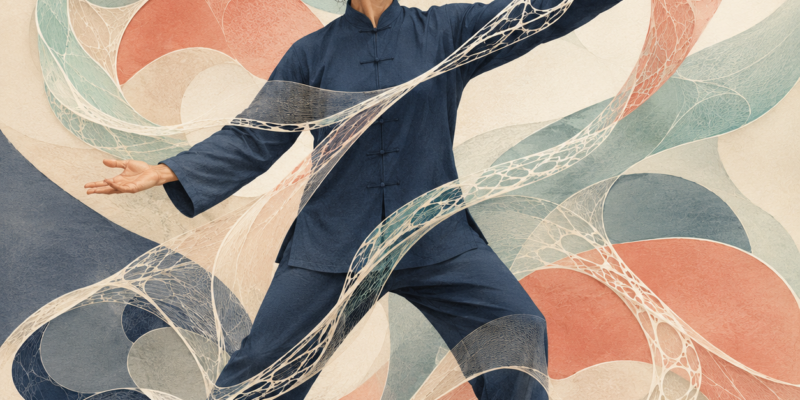
A connected body
Movement is often explained in terms of individual muscles. Fascia offers another perspective: the body as an interconnected network in which movement and tension in one place can influence another. Shibashi’s slow, sweeping movements allow us to explore this sense of connection without forcing stretches or pursuing ideal positions.
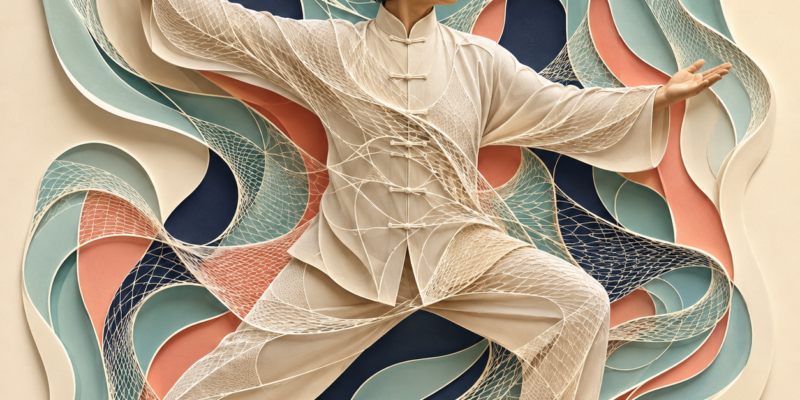
The body dashboard
Before we consciously decide how we feel, the brain is already monitoring breathing, posture, pressure, tension, heartbeat and internal sensation. I think of this as the body dashboard. Slow movement and careful attention may change the signals appearing on that dashboard—and therefore change how movement, effort and mood are experienced.
Massage. Move. Meditate.
First, wake up sensation. Then explore movement. Finally, pause and notice what has changed. Massage uses tapping, rubbing or gentle touch to increase awareness.Move introduces slow, connected changes in posture and weight.Meditate means listening to the result rather than attempting to achieve a special state. Together they turn movement practice into a simple experiment.
Practice at home
Practising Shibashi with others can be enjoyable and motivating, but there is no reason for the practice to end when the class finishes. Once you are familiar with the movements, you can continue at home and adapt each session to the time you have available. Below are two resources to help: a playlist of practitioners performing Set 1 and my Shibashi app for guiding your own practice.
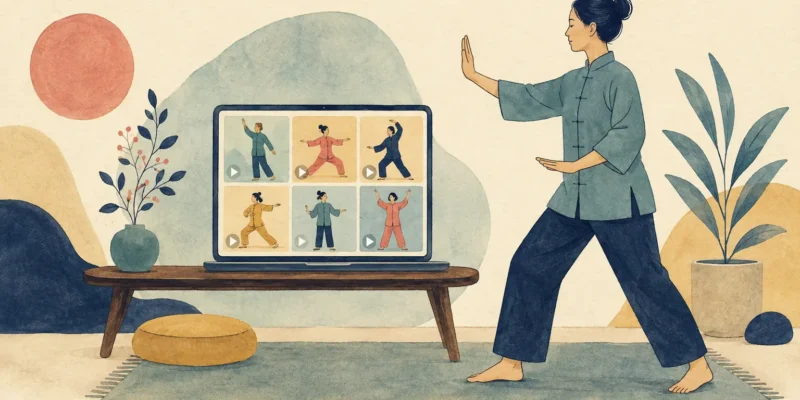
Watch on YouTube
This playlist brings together several practitioners performing the first Shibashi set. Although they follow the same eighteen movements, each brings a different rhythm, range and character to the sequence. Watching these variations can help you remember the movements, practise between classes and discover an approach that feels natural to you. One set, many interpretations (click…
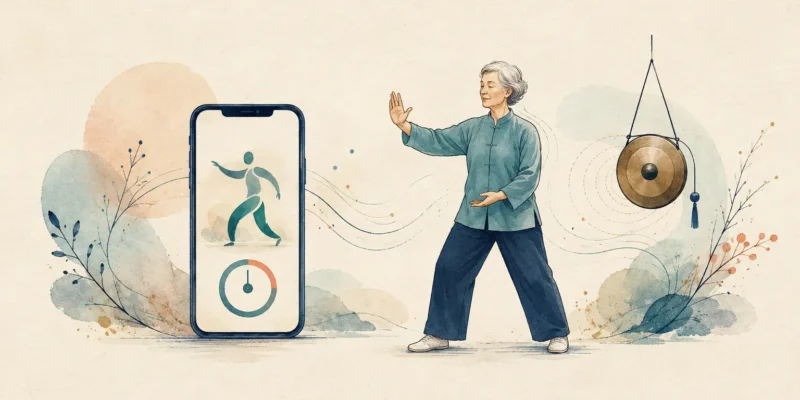
Shibashi app
The Shibashi app is a simple companion for practising Sets 1–3 and 5–7. Choose a complete set or create a mixed sequence, decide how long you want to practise, and the app will guide you through the eighteen movements with clear timings and a gong between exercises. It is intended as an aid to remembering…
Need more than 18
Lin Housheng went on to develop eight Shibashi sets, although Set 4 is different: rather than being another continuous sequence, it combines movements from Sets 1–3 into shorter routines intended for particular health conditions. I practise Sets 1, 2, 3, 5 and 6—enough to enjoy a different set every weekday—with Set 2 remaining my personal favourite. Some of the later movements become livelier and occasionally bear more than a passing resemblance to Morris dancing, as my YouTube clip illustrates. Below you can see videos of all five sets I practise—and if even ninety movements are not enough, there are other paths to explore afterwards.
Still need more
Shibashi is only one path through the wider world of Qigong and Tai Chi. My own practice also includes the Five Animals, the Eight Brocades and Yang-style Tai Chi—all of which I can teach. Each offers something different: the Five Animals are playful and expressive; the Eight Brocades form a compact traditional sequence for moving and strengthening the whole body; and Yang Tai Chi develops balance, coordination and flowing movement through a longer, more intricate form. They are not necessarily the next step after Shibashi, but alternative ways of exploring many of the same principles. The three posts below introduce these practices through videos by experienced practitioners.
Five Animals
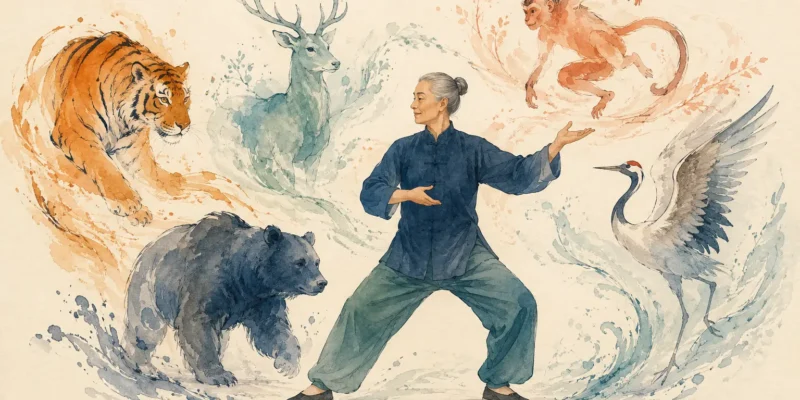
The Five Animals is a playful and expressive form of Qigong inspired by the tiger, deer, bear, monkey and crane. The aim is not simply to imitate the animals, but to explore their different qualities: the tiger’s strength, the deer’s lightness, the bear’s rooted power, the monkey’s agility and the crane’s balance and grace. This…
Yang Tai Chi
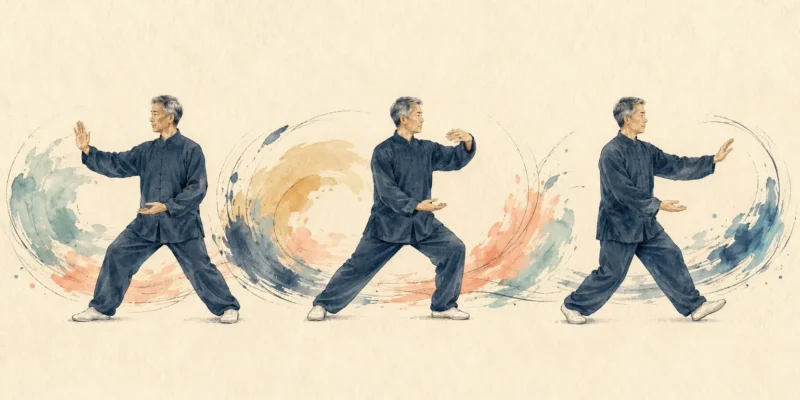
Yang-style Tai Chi is a longer and more intricate sequence in which each posture flows continuously into the next. Its slow, rounded movements develop balance, coordination, weight transfer and an awareness of how power can travel through the whole body without unnecessary tension. It takes longer to learn than Shibashi, but that challenge is part…
Eight Brocades
The Eight Brocades, or Ba Duan Jin, is a traditional sequence of eight exercises, each exploring a different pattern of stretching, opening, turning or strengthening the body. It is generally more structured and physically direct than Shibashi, but the movements remain slow, controlled and adaptable. The complete sequence is relatively easy to remember and provides…
News
Practising Shibashi with others can be enjoyable and motivating, but there is no reason for the practice to end when the class finishes. Once you are familiar with the movements, you can continue at home and adapt each session to the time you have available. Below are two resources to help: a playlist of practitioners performing Set 1 and my Shibashi app for guiding your own practice.
Where to find the class
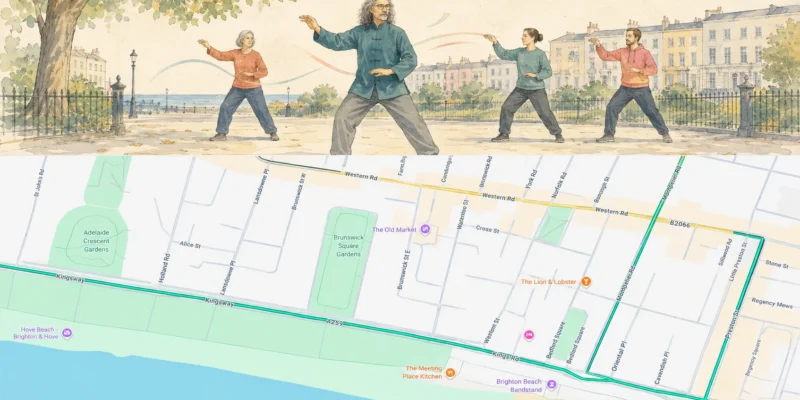
If it isn’t raining, then we will meet at the south end of Brunswick Square. (The man in the image below is not doing qigong to the best of my knowledge!) If it is raining but not too windy, then come to the Bandstand. If it is raining and windy, then the session will be…
Scientific and poetic approaches to qigong
Qigong is often described as a practice of gentle movement and breath. However, beneath its simplicity lies something more complex—and more interesting. How we experience qigong depends on the lens through which we view the world. This piece offers two such lenses: One is modern, anatomical, and grounded in scientific understanding.The other is poetic, cosmological, and…
Frequently asked questions
Not at all. The movements are easy to begin, and newcomers are welcome to join at any time. You can simply follow along and gradually become familiar with the sequence.
No. The classes are informal and drop-in, so you can come whenever it suits you.
Classes usually take place in Brunswick Square Gardens every Monday, Wednesday and Friday at 7.45am. Each session lasts approximately 30 minutes. Check the notice at the top of the homepage before leaving in case the location has changed.
The regular morning sessions in Brunswick Square are free.
In rain with relatively little wind, we may meet under the shelter of Brighton Bandstand. When strong winds make practising outside uncomfortable, the session may move online through Whereby. The current location will be shown at the top of the homepage.
Wear comfortable clothes that allow you to move freely, together with suitable footwear for practising outdoors. You do not need special clothing or equipment.
Shibashi does not require great strength or flexibility. The movements are gentle and can be made larger or smaller according to your own comfortable range. If you have any concerns, let Richard know.
Yes. Shibashi is not about forcing the body into a perfect position. Movements can usually be reduced, slowed down or adapted to suit different levels of mobility. If you have a medical condition or are uncertain whether a movement is appropriate, please seek professional medical advice and let me know before the class.
Regular practice will help you remember the sequence and notice more within the movements, but you do not have to attend every session. Unlike learning a long Tai Chi form, Shibashi works well as a drop-in activity.
No particular belief is required. Some people approach Qigong through traditional ideas such as qi, while others understand it through movement, breathing, balance, attention and modern physiology. You are welcome to bring your own interpretation—or simply enjoy moving.
Qigong is a broad name for many Chinese movement, breathing and awareness practices. Shibashi is one form of Qigong, organised into flowing sequences of eighteen movements and influenced by Tai Chi. Tai Chi developed as a martial art and generally uses longer, more intricate forms involving continuous changes of direction and weight.
Yes. The website includes a playlist showing different practitioners performing Set 1, together with the Shibashi app, which can time the movements and guide you through complete or mixed sequences.
Videos are very useful for remembering the order and comparing different interpretations of the movements. A class, however, makes it easier to understand details such as weight transfer, comfortable posture and how one movement flows into the next.
Yes. Lin Housheng created eight sets. I practise and teach Sets 1, 2, 3, 5 and 6, giving us ninety movements to explore. Set 4 is arranged differently, combining movements from the first three sets into shorter routines associated with particular health conditions.
My practice also includes the Five Animals, the Eight Brocades and Yang-style Tai Chi. Each provides a different way of exploring balance, coordination, connected movement and attention.
Email me at brightonweb at gmail dot com